What is a dispersal pan on an airfield?
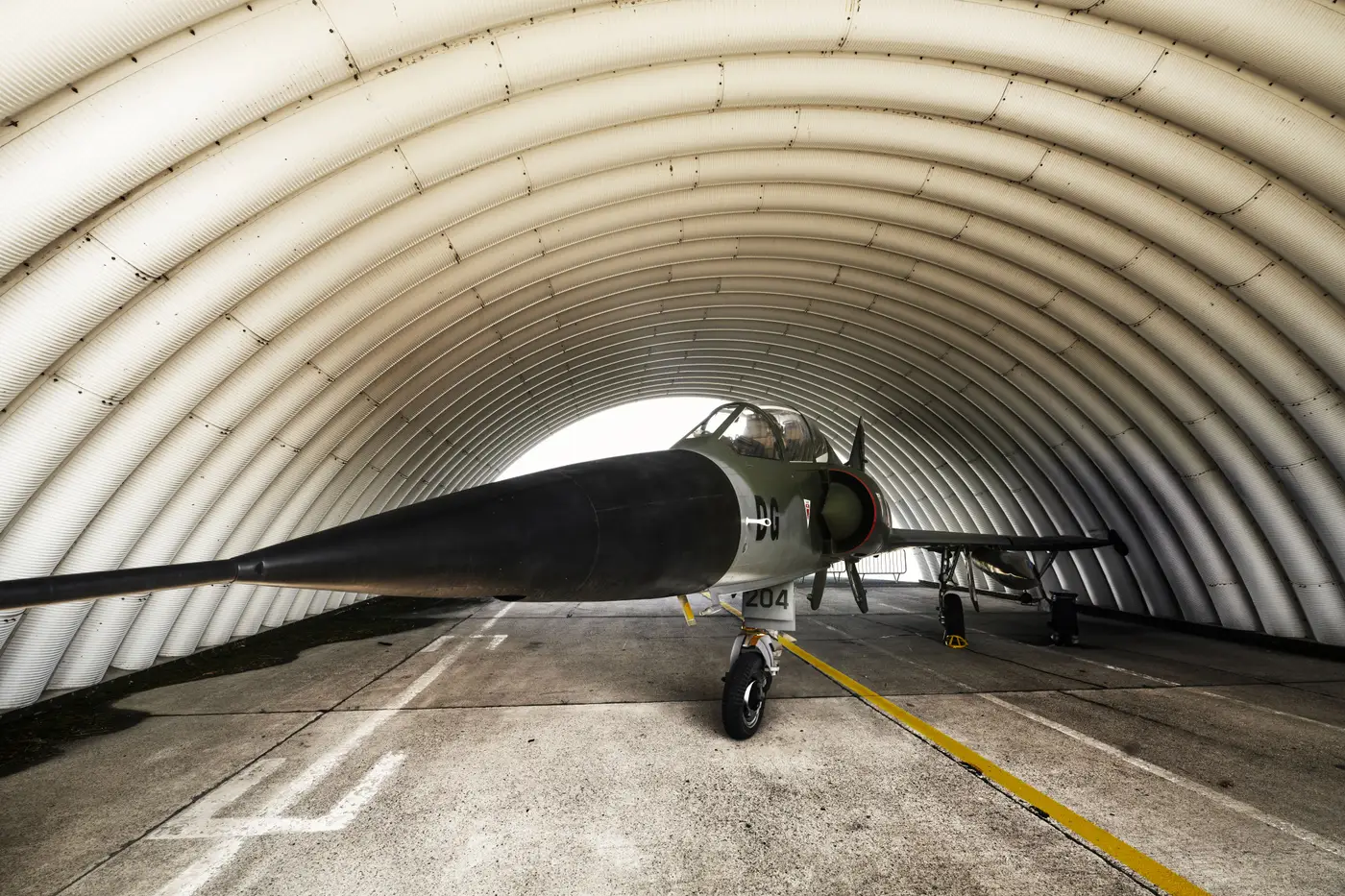
A dispersal pan is a paved parking position set apart from the main apron, usually linked to the taxiway network by a short spur, built so that aircraft don't sit bunched together where one strike or one fire takes out the whole lineup. You'll see them ringing the perimeter of a base, tucked into tree lines, or spaced along a loop taxiway well clear of the runway and the main ramp. Some are bare pads. Many are backed by earthen revetments or paired with a hardened aircraft shelter. The pan is the slab itself; the revetment or shelter is whatever's stacked around it for protection.
The logic goes back to basic damage control. Park forty aircraft nose-to-tail on one apron and a single raid, or a single fuel fire, can wipe out the whole squadron. Spread those same forty across dispersal pans a hundred meters apart and you've turned one catastrophic loss into forty separate, survivable problems. NATO bases built this into their post-WWII and Cold War layouts, and you still see the pattern today: a cluster of revetted pans ringing a taxiway loop, often with sharper, sheltered turns than you'd expect on a plain access road.
Dispersal pan vs. hardstand
This is where a lot of people reading imagery for the first time trip up, because the terms overlap in casual use but mean different things on the ground.
A hardstand is the generic term for any paved parking position, full stop. It's the catch-all. A gate stand at a civil terminal is a hardstand. A spot on the main ramp where a transport aircraft sits for loading is a hardstand. The word says nothing about location, protection, or purpose.
A dispersal pan is a specific kind of hardstand: one deliberately sited away from the main apron for survivability. Every dispersal pan is a hardstand. Not every hardstand is a dispersal pan.
If you're trying to tell them apart on a tile, look at three things: distance from the main ramp, presence of a revetment or shelter, and the taxiway geometry feeding it. A pan usually sits off a dedicated spur rather than directly off the main taxiway, and the apron it leads to is small, often sized for one or two aircraft rather than a row.
Other apron layout terms worth knowing
A few more terms show up constantly once you're tracking posture at a named airfield, and mixing them up muddies your notes:
- Apron is the broad paved area for parking, loading, and servicing aircraft, including the main ramp in front of the terminal or hangar line.
- Revetment is the earthen or concrete berm built around a pan to absorb blast and limit line-of-sight between adjacent positions. You'll often see these as a distinctive herringbone or scalloped pattern on imagery, which is usually the fastest visual cue that you're looking at dispersal rather than ordinary ramp space.
- Hardened aircraft shelter (HAS), sometimes called a blast pen or bunker, is a roofed, armored structure built over or instead of an open pan. These read as rectangular or arched structures with a hard shadow line, distinct from the soft-edged shadow of an open revetment.
- Taxiway spur is the short connector linking a dispersal pan or shelter to the main taxiway loop, usually built at a tighter turn radius than the main taxiway itself.
Knowing which term applies to which feature matters because it changes what a count actually tells you. An aircraft parked on the main apron is routine. The same aircraft type suddenly filling empty dispersal pans, or a run of new slab construction alongside revetments that weren't there last season, is the kind of change that's worth a note in the log.
Spotting that shift by eye means scrolling through archive tiles from months apart and hoping you remember what the apron looked like last time. Airfield Activity runs that comparison for you, tracking aircraft counts and construction at a named airfield day over day so the change is already flagged instead of buried in a stack of old passes.
If you're watching a base closely enough that dispersal pan counts matter to your assessment, it's worth seeing what a running daily log looks like before you go back to scrolling tiles by hand.